Coverage starts with the policy and the circumstances
Homeowners insurance may cover some forms of water damage, but there is no answer that fits every leak. The policy language, endorsements, exclusions, cause of loss, and facts about the damage all matter. A sudden plumbing failure and moisture that has developed over time can raise different questions. Even similar looking stains may come from different causes. Only the insurer can decide how your coverage applies after reviewing the relevant information and the terms of your policy.
This article offers general information, not an interpretation of your policy or advice about obtaining a particular claim outcome. Keep the repair question separate from the coverage question: a material may need attention regardless of whether insurance pays for that work. Your insurer or licensed insurance professional can explain policy terms and coverage questions. A restoration contractor can explain observed conditions, proposed services, and supporting documentation, but should not present its assessment as a binding promise that your insurance will pay.
The water source can change the coverage discussion
Damage following an accidental indoor water release is often evaluated differently from damage associated with outside flooding, groundwater, repeated seepage, or inadequate maintenance. Standard homeowners policies commonly treat flood damage separately, and a separate policy may be relevant. Sewer or drain backup may involve its own endorsement or exclusion. These are broad distinctions rather than determinations about your property. A room containing standing water does not, by itself, identify the applicable insurance category or establish that a particular exclusion applies.
Be precise when recording what you observed. Note whether water was visible near an appliance, beneath plumbing, along an exterior wall, or after rainfall. If a qualified professional identifies a failed component, preserve that written finding with your other records. Do not turn an uncertain observation into a definite explanation. Hidden water paths can make the apparent entry point misleading, and several conditions can coexist. The aim is an accurate description of the property and the work, not a label chosen because it sounds more likely to be covered.
Organize a factual record of the damage
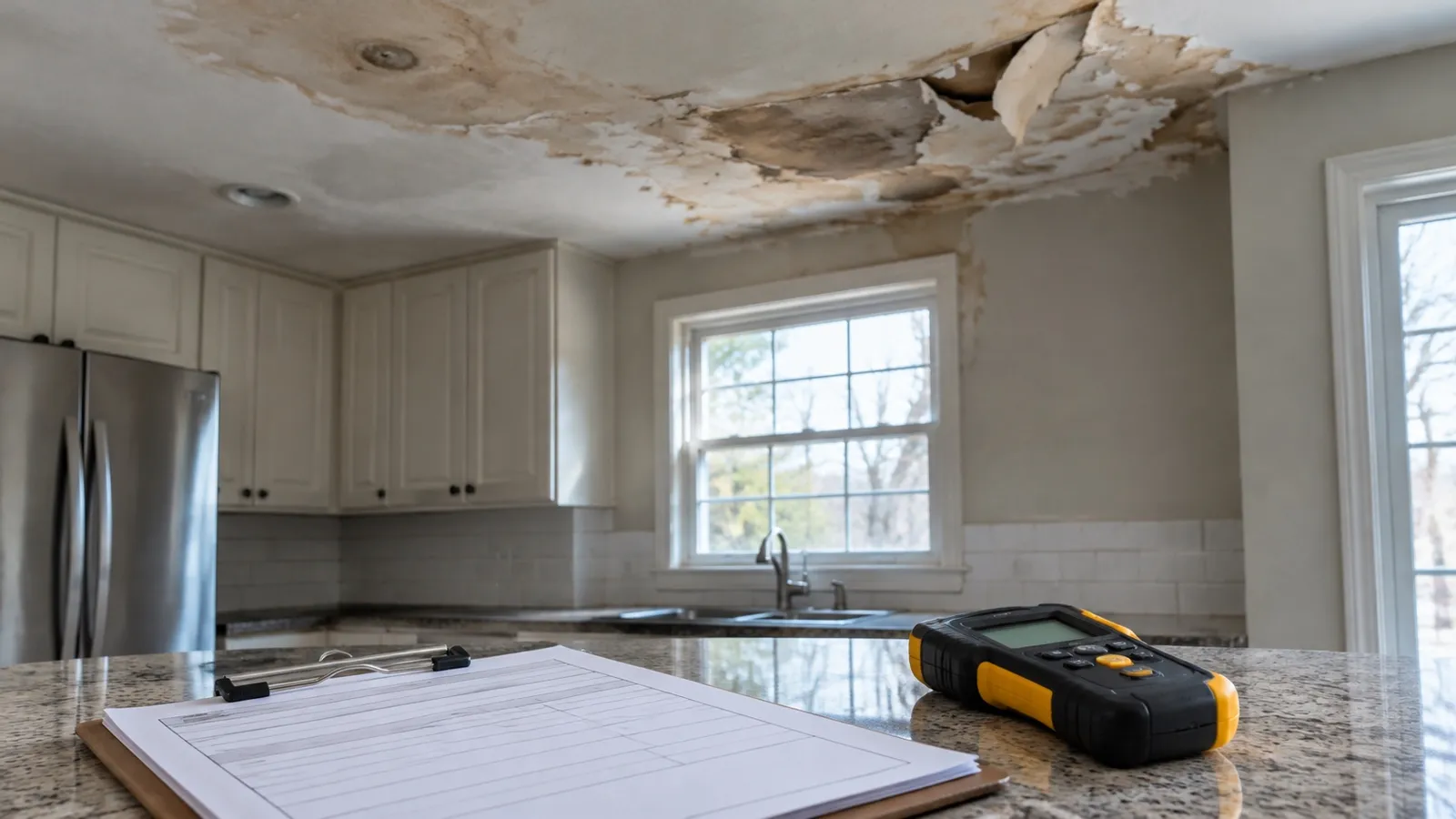
Useful documentation starts with clear, dated observations. Photograph affected areas from safe locations, including an overall room view and closer images of damaged materials. Record when you first noticed the issue and what you could see at that time. If you safely shut off a water supply or arranged an emergency service, retain the related receipt and a brief note about the action. Never enter an unsafe space or postpone emergency assistance to obtain a better photograph.
Keep records in a place you can access if part of the home becomes unavailable. Preserve original files when practical, and label copies in a way that makes rooms and dates easy to identify. Avoid editing images in ways that change their meaning. If a condition changes during work, a new photo with a short explanation can help connect the earlier observation with the later finding. Documentation should show what happened and what was done without speculation about motives, blame, or an expected insurance decision.
- Room photographs, videos, and a simple timeline of observations.
- Descriptions of affected belongings and purchase information already available to you.
- Written scopes, signed authorizations, service receipts, and invoices.
- Professional findings, moisture records, and updates describing changes in the work.
Understand the project manager’s role
A project manager from our network works directly with the insurance company and handles documentation and billing. That role connects the restoration record with the services being performed: observed damage, proposed work, progress information, and invoices. Independent, licensed restoration contractors in the network carry out the work. The project manager does not decide coverage, negotiate a settlement, or adjust the claim. Communication about the project should keep those boundaries clear so you know which questions belong with the insurer and which concern the property itself.
You remain the person who decides what work to authorize. Ask for a written description of the proposed services and an explanation of any uncertainty before signing. If opening a wall reveals additional damage, understand how the scope may change and how further authorization will be handled. Direct communication with the insurance company does not remove your financial responsibilities or convert a contractor’s invoice into a coverage approval. Keep your own copies of authorizations and billing records so the practical work and its financial implications stay understandable.
Separate the scope of work from what insurance pays
Restoration scope describes the work proposed for the property. Coverage describes whether and how a policy responds to the circumstances. Those two subjects interact, but they are not interchangeable. A source repair, removal of damaged finishes, drying service, and replacement material may each raise different policy questions. An estimate can explain tasks and anticipated costs without establishing that every line is insured. Ask the insurer for explanations of coverage decisions rather than relying on assumptions based on a contractor’s preliminary scope.
Owners are responsible for the deductible and non-covered work. Optional improvements or changes beyond the damage-related scope may also create costs for the owner. If you want different flooring, upgraded fixtures, or work in an unaffected room, ask that those choices be clearly distinguished from the restoration scope. Before authorizing a change, understand the proposed price and who is responsible for payment. Uncertainty about coverage is a reason to seek a clear explanation, not a basis for anyone to promise that your out-of-pocket obligation will disappear.
Keep safety and communication straightforward
Whatever the insurance situation, do not enter standing water near electrical equipment, disturb a sagging ceiling, or handle potentially contaminated materials without appropriate professional guidance. Call 911 for immediate danger. Photos and paperwork are secondary to protecting people. The practical restoration plan should identify the source, affected materials, access restrictions, and next assessment steps. Ask for plain descriptions when a document uses unfamiliar terms so you understand what is being proposed for your home.
Maintain a single collection of project records and note which questions remain unanswered. Coverage questions belong with the insurer; questions about methods, materials, scheduling, and invoices belong with the project manager or contractor responsible for that work. You can reach (908) 585-3686 at any time, day or night, to connect with a project manager from our network. This is not a coverage determination or a promise of immediate attendance. Clear documentation and distinct responsibilities help you make informed decisions without confusing restoration services with the insurer’s authority over the policy.