Start with safety, not cleanup
Finding water inside your home can make every decision feel urgent. The first priority is getting people and pets away from danger, not rescuing flooring or furniture. If there is immediate danger, call 911. Leave areas with sagging ceilings, shifting floors, smoke, suspected gas leaks, or water near electrical equipment. Do not walk through standing water to reach a breaker panel or unplug an appliance. A qualified professional should determine how to isolate electricity when access is unsafe.
The appearance of the water does not establish whether it is safe. Water from outdoors, drains, or an unknown source may carry contaminants, and a plumbing leak can pick up material as it moves through a building. Keep children and pets outside the affected area. If you cannot reach an item from a dry, stable position without touching suspect water, leave it in place. Wet belongings are replaceable; an injury creates a separate emergency that cleanup cannot solve.
Limit the source only when it is safe
If you recognize an active plumbing leak and can reach the appropriate shutoff from a dry location, turning off the water may limit additional damage. Do not force a stuck valve or dismantle damaged plumbing. For a supply line you cannot isolate, ask a plumber or the water utility about a safe next step. A roof leak during a storm is not a reason to climb onto a wet roof or enter an unstable attic.
Separate stopping the source from repairing the damage it left behind. A pipe repair may prevent new water from entering while insulation, subflooring, or wall cavities remain wet. Likewise, a bucket beneath a drip does not show where water traveled before it became visible. Record the time you noticed the problem and any safe action you took. That simple sequence helps the people assessing the property understand whether moisture may still be entering and which areas need closer attention.
- Use an accessible shutoff only if doing so does not expose you to electrical or structural hazards.
- Stay off ladders and roofs when conditions are wet, windy, or unstable.
- Keep the affected space separated from normal household activity until hazards are assessed.
Document what you can without disturbing hazards
Take photos or short videos from safe positions before moving accessible belongings. Capture a wide view of each affected room, then closer views of visible staining, damaged finishes, and the apparent source. Describe observations plainly: water beneath the sink, a stained ceiling, or damp carpet near a doorway. Avoid guessing how long concealed materials have been wet or declaring that something is permanently damaged before it has been evaluated.
Keep a written list of affected belongings with descriptions and any purchase records you already have. Save receipts for necessary services and copies of work authorizations. Documentation should not delay evacuation, source control, or other essential safety measures. If a hazardous material must be removed promptly, ask the professional handling it how the condition can be recorded safely. A project manager from our network works directly with the insurance company and handles documentation and billing. The insurer decides coverage; you choose what work to authorize and remain responsible for your deductible and non-covered work.
Protect accessible belongings without spreading contamination
From a dry and safe area, you may be able to move unaffected items away from the edge of the damage. Favor lightweight objects that do not require crossing wet flooring or entering a damaged room. Keep potentially contaminated belongings separate from clean possessions. Do not carry dripping boxes through unaffected rooms or place wet textiles against finished furniture. Ask for handling guidance when sewage, outdoor floodwater, or an unknown water source is involved.
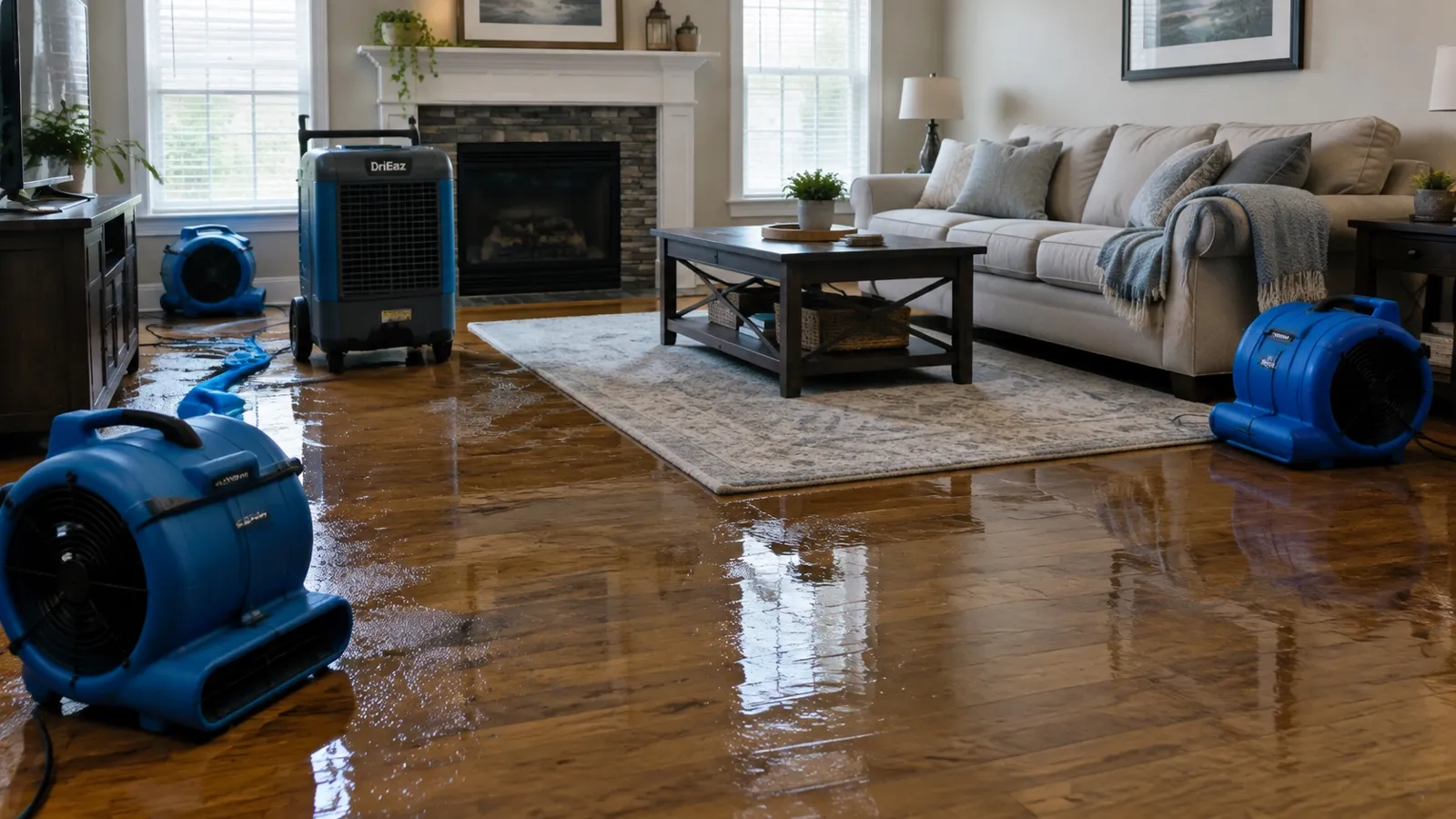
Avoid using a household vacuum to remove water. Do not switch on fans simply because a surface feels damp; air movement can spread contaminants, and equipment placed on wet surfaces can create electrical hazards. Opening windows is not always helpful either, because outdoor humidity and temperature affect drying. Leave swollen cabinetry, attached flooring, and saturated ceiling materials for professional evaluation rather than pulling them apart. If you rent or live in a shared building, notify the responsible property contact so adjoining spaces and shared building systems can also be considered.
Understand what the initial assessment should establish
A useful assessment looks beyond the visible puddle. Independent, licensed restoration contractors in our network perform the work and evaluate the affected materials, likely water path, and conditions that may complicate drying. Moisture readings help establish where further inspection is needed, although no single reading explains an entire building. Discuss nearby rooms, closets, flooring layers, and spaces below the leak. Tell the evaluator about previous moisture problems or repairs rather than assuming they are unrelated.
The proposed scope should explain source control, water removal, any necessary material removal, and the drying approach. Some assemblies can be dried in place; others may need access or removal because of contamination, trapped moisture, or physical damage. Ask how those decisions will be documented and what changes would require your approval. Older materials may require evaluation for regulated hazards before disturbance. You do not need to diagnose the building yourself, but you should understand why a particular opening, removal, or piece of equipment is proposed.
Make a clear plan for the next day
Before the first day ends, aim for an understandable plan rather than a promise that everything will already be dry. Confirm who is addressing the source, which areas should remain off limits, and when conditions will be checked again. Ask how drying equipment affects room use, pets, doors, and electrical circuits. Do not move or unplug equipment without discussing it with the contractor, unless there is an immediate safety concern requiring you to leave and seek emergency help.
Keep contact details, photos, receipts, and authorizations together. Write down unanswered questions so you can revisit them when the immediate disruption feels less overwhelming. For help connecting with a project manager from our network, call (908) 585-3686, available 24/7. Availability does not establish an arrival time; access, conditions, and contractor scheduling affect next steps. The goal of the first day is to reduce avoidable exposure, establish the extent of damage, and begin an appropriate drying plan without rushing into repairs that conceal remaining moisture.