Three terms describe different goals
After property damage, you may hear mitigation, restoration, and reconstruction used in the same conversation. They are related, but they do not always describe the same work. Mitigation generally aims to limit additional damage and stabilize conditions. Restoration focuses on addressing damage and recovering materials or spaces where practical. Reconstruction involves rebuilding or replacing components that cannot remain. A single project can require all three, and providers may use restoration as an umbrella term for the complete recovery process.
Because usage varies, a label is less useful than a written description of the tasks. Ask what is included, what is excluded, and what condition marks completion of each phase. An estimate titled restoration might cover drying only, while another may include repairs. Neither title tells you enough by itself. Understanding the intended goal helps you avoid assuming that removing equipment means walls will already be rebuilt or that a temporary protective measure is the finished solution for a damaged part of the home.
Mitigation limits continuing damage and exposure
Mitigation addresses immediate conditions that can make a loss worse. Depending on the event, it may include removing accessible standing water, establishing a controlled drying environment, separating affected areas, or arranging temporary protection for damaged openings. Source control may require a plumber, roofer, utility provider, or another appropriate professional. These tasks are not interchangeable, and the safest order depends on the property. Call 911 for immediate danger, and do not enter standing water near electricity or a space with structural instability to begin cleanup.
Some mitigation work is temporary by design. A protective covering is not necessarily a permanent roof repair, and water removal does not mean concealed assemblies are dry. Ask which measures need monitoring and who is responsible for the next step. Independent, licensed restoration contractors in our network perform the work. The scope should explain why each proposed action is needed and how it connects to the overall project, rather than relying on urgency alone to make every recommendation seem self-explanatory.
- Identify the condition being stabilized and any remaining safety restrictions.
- Confirm whether source repair is included or requires another professional.
- Ask how progress will be checked and when temporary measures need review.
- Keep mitigation records separate from assumptions about completed repairs.
Restoration evaluates what can be recovered
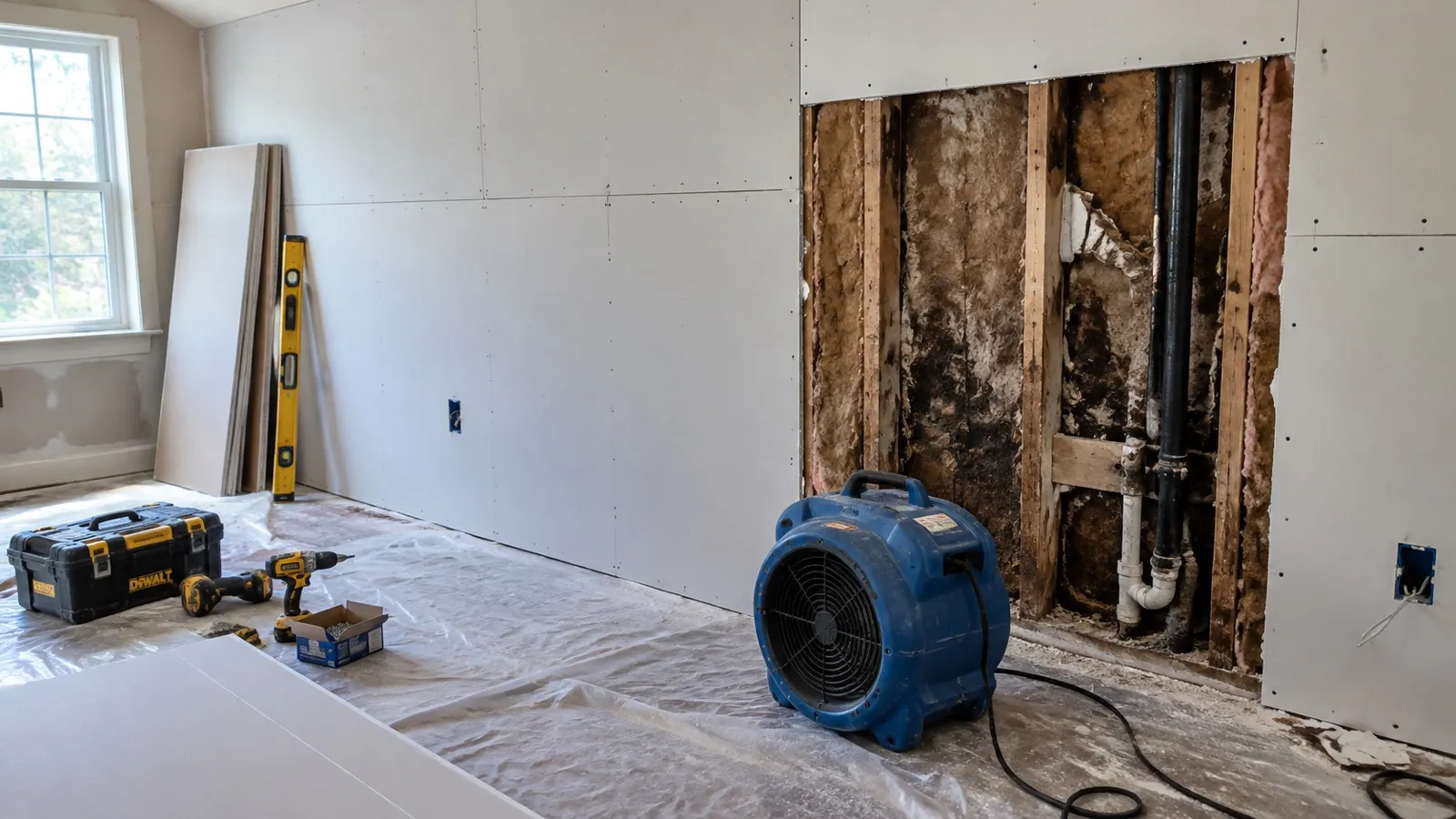
In its narrower sense, restoration addresses affected materials and conditions through methods such as drying, appropriate cleaning, and treatment of remaining damage. The objective is not to keep every item at any cost. A material’s condition, contamination, accessibility, and response to treatment help determine whether recovery is reasonable. For example, an exposed framing member and saturated insulation present different questions. Ask how the proposed method fits the actual material rather than assuming all wet or smoke-affected surfaces should receive identical treatment.
Completion should be tied to the work performed and the conditions being evaluated. A dry-looking wall does not establish that its concealed layers are ready for finishing, and a pleasant fragrance does not demonstrate that smoke residues were removed. Follow-up assessment helps determine whether the selected approach is working or needs revision. Keep records of findings and ask about unresolved limitations. Restoration can reduce the amount that needs replacement, but it should never be described as a guarantee that every surface, belonging, or original finish will return unchanged.
Reconstruction rebuilds components that cannot remain
Reconstruction may involve replacing removed drywall, insulation, flooring, cabinetry, or other building components. More extensive damage can require structural or utility work by the appropriate qualified trades. This phase normally depends on suitable preparation: the source has been addressed, required removal is complete, and relevant cleaning and drying conditions have been evaluated. Covering an unresolved problem with new materials can undermine the repair. Ask what must be confirmed before a wall is closed or a new floor is installed.
The reconstruction scope should identify materials, finishes, and boundaries of the repair. Matching an existing product may require discussion if the original is unavailable or surrounding finishes have aged. Permits, inspections, trade schedules, and product availability can affect timing. Optional upgrades should be distinguished from damage-related replacement so their cost and schedule effects are clear. If you choose a different layout or an upgraded material, request an updated written description rather than relying on a conversation that leaves the original scope and the added work difficult to separate.
The handoffs matter as much as the individual phases
A common source of confusion is the space between one phase ending and another beginning. Drying equipment may leave before repair materials arrive. A plumber may fix the source while another contractor manages damaged finishes. A room may be accessible for inspection but not suitable for normal use. Ask who coordinates those transitions, which conditions must be documented, and who will tell you when restrictions change. Clear handoffs help prevent assumptions that someone else has already addressed an unfinished task.
A project manager from our network works directly with the insurance company and handles documentation and billing. That coordination does not determine coverage or remove the need for your authorization. The insurer decides coverage; you decide which work to authorize and remain responsible for the deductible and non-covered work. Ask how additional findings, scope changes, and separate trade invoices will be handled. Keep copies of approvals and updated scopes so the financial record follows the same sequence as the physical work taking place in the building.
Use clear questions to compare and approve a scope
When reviewing a proposal, start with the condition it is meant to address. Then ask about the specific tasks, materials, exclusions, completion criteria, and next phase. A lower total may reflect a smaller scope rather than a different price for the same work. Likewise, a longer schedule may include reconstruction that another proposal leaves out. Ask for explanations in plain language, including who is responsible for temporary protection, source repair, permits where needed, and any work outside the stated scope.
Keep your household needs part of the discussion, especially when damage affects essential rooms or access routes. Ask what you may safely use, what equipment should remain undisturbed, and who to contact when conditions change. For help connecting with a project manager from our network, call (908) 585-3686, available 24/7; attendance depends on circumstances and scheduling. You do not need to memorize industry terminology to make informed decisions. A clear description of the goal, the authorized work, and the next handoff is more valuable than a reassuring label that leaves important details unstated.