
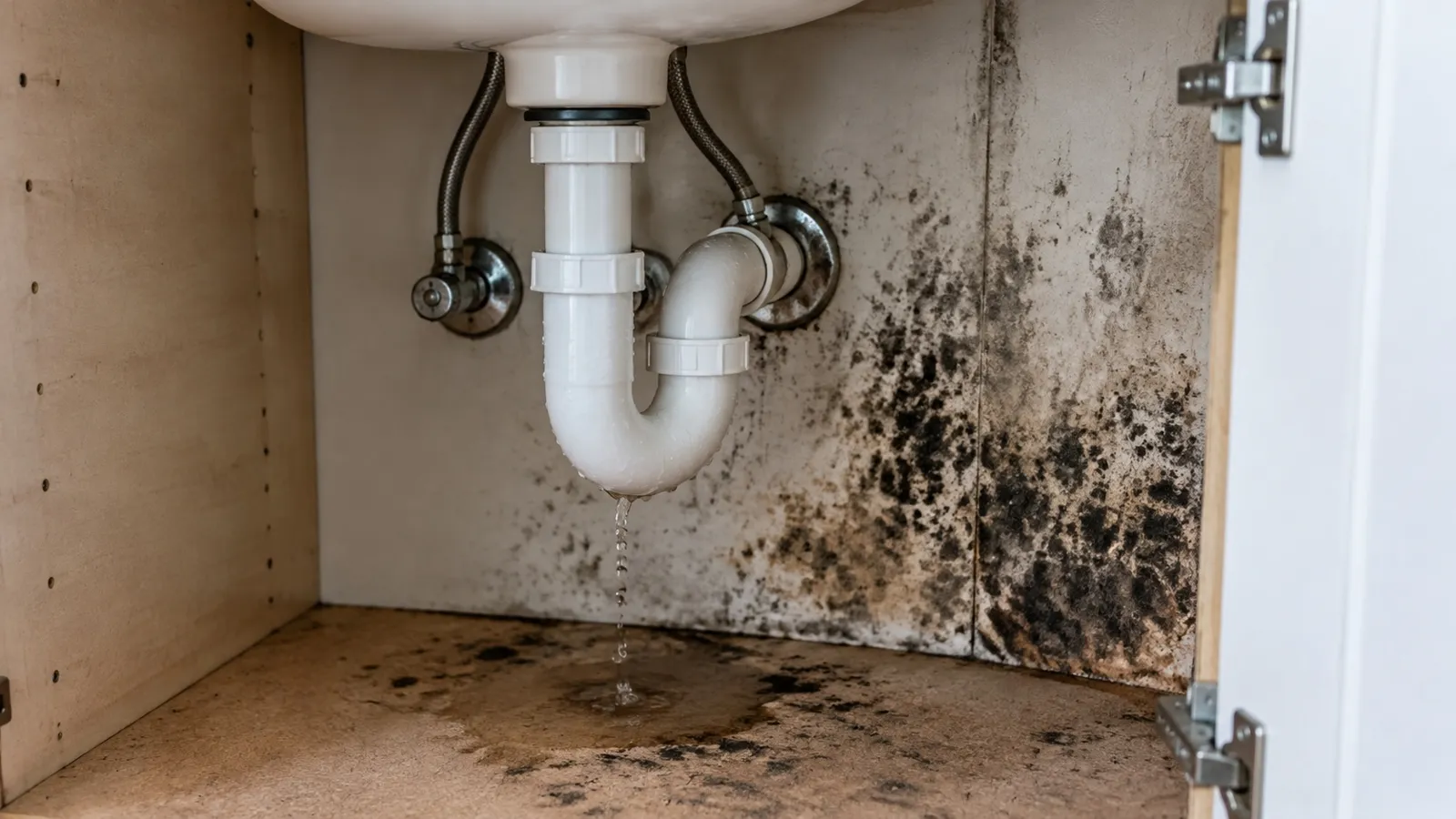
A stopped leak does not always mean a dry building
Mold can grow after a leak when moisture remains available on suitable materials. Repairing a supply line or roof opening stops one part of the problem, but it does not establish that nearby drywall, framing, insulation, or flooring is dry. Water can collect inside assemblies or move beyond the first visible stain. That is why the condition of the surrounding materials matters even when the dripping has ended and the room appears ready to use again.
There is no dependable household countdown that tells you whether mold has started or whether an area is safe. Conditions such as material type, temperature, moisture, and how long an area stays damp influence what happens. Prompt attention to moisture is sensible, but an exact deadline should not replace assessment. A leak noticed quickly may still reach a concealed cavity, while an older stain may no longer represent an active moisture source. The practical question is what is wet now, how it became wet, and whether affected materials have been appropriately evaluated.
Watch for changes without trying to diagnose by appearance
Discoloration, recurring musty odors, softened drywall, peeling finishes, or flooring changes can justify closer evaluation after a leak. None of those observations alone proves mold is present. Staining may have another cause, and some moisture problems develop where no surface change is visible. Record what you notice, where it appears, and whether it changes after rain, plumbing use, or operation of heating and cooling equipment. These observations can help direct an inspection without requiring you to identify the material yourself.
Color does not establish the type of mold, its health significance, or the correct response. Do not rely on online photo comparisons to label a patch as harmless or dangerous. Similarly, an absence of odor does not confirm that a wall cavity is dry. If you can inspect safely without touching or opening anything, take photographs and keep the area undisturbed. A professional assessment should connect visible conditions with moisture information and the building history rather than reaching a conclusion from one image or a single smell.
- A stain that expands or returns after the original leak was repaired.
- Persistent dampness, softened finishes, or new bubbling near the affected area.
- An unexplained musty odor near cabinetry, closets, or adjacent rooms.
- Changes beneath flooring or along baseboards that suggest water traveled farther.
Avoid disturbing suspect materials or spreading debris
Do not cut into a wall, scrape a patch, or remove a ceiling panel simply to see what is behind it. Disturbance can spread particles and may expose electrical hazards, unstable materials, or regulated substances in older construction. Avoid aiming a household fan at suspected growth or carrying affected debris through clean rooms. Keep children and pets away from the area, and discuss access limits with a qualified professional before attempting cleanup. The safest next step depends on the source, material, location, and extent of the problem.
Household cleaning products are not a universal solution for water-damaged assemblies. A visible surface may be only part of the affected material, especially where porous layers remain damp. Never mix cleaning chemicals, and do not use a fragrance to judge whether the underlying issue has been resolved. If you have immediate danger from electricity, structural instability, or another emergency, leave the area and call 911. Mold concerns do not make it safe to enter a hazardous space or to ignore the original water source while focusing on a visible patch.
A useful assessment connects moisture, materials, and access
An assessment should start with the leak history and the areas water could have reached. Tell the evaluator when you noticed the problem, how the source was repaired, and whether drying work occurred. Share photos from the original event if available. Moisture readings and a careful inspection can help identify where more investigation is warranted. Tools have limits, so ask what each finding shows and what remains uncertain rather than treating a single instrument reading as a complete answer.
Testing is not automatically the first or only useful step. Whether sampling would answer a specific question depends on the circumstances and the professional evaluation. A test result does not repair a leak, remove damaged material, or establish that every concealed area has been addressed. Ask what decision a proposed test would inform and how the result would change the work. Independent, licensed restoration contractors in our network perform restoration work, and any specialist assessment should have a defined purpose within the overall plan for moisture control and affected materials.
Address the cause and understand the proposed work
A durable response needs to address the moisture source as well as affected materials. That may mean plumbing repair, correcting an exterior entry point, or resolving a condition that repeatedly leaves a surface damp. Depending on the circumstances, the work may involve controlled removal, cleaning of appropriate materials, and drying before repairs. Ask how work areas will be managed, how debris will leave the building, and what conditions must be met before new finishes are installed. Painting alone should not stand in for resolving an underlying moisture issue.
Request a scope that explains what is known, what further access may reveal, and how changes will be authorized. A project manager from our network works directly with the insurance company and handles documentation and billing, but the insurer decides coverage. You determine what work to authorize and owe your deductible and non-covered work. Keep the technical need for assessment separate from assumptions about insurance. Whether a particular policy responds to mold-related work depends on its terms and the circumstances, not on a contractor’s general description of the problem.
Monitor the repaired area and seek the right help
After work is complete, retain the repair and drying records and know which changes should prompt another call. A new stain, returning dampness, or a recurring odor deserves attention rather than another coat of paint. Check accessible areas during ordinary use without opening finished assemblies or moving heavy fixtures yourself. If a plumbing connection, appliance, or exterior repair requires maintenance, follow the responsible professional’s instructions. Preventing repeated moisture is an ongoing building task, not a guarantee that any home will never experience another leak.
If someone has health concerns related to the environment, consult a qualified healthcare professional; a restoration assessment cannot diagnose symptoms or establish a medical cause. Discuss practical access needs with the project manager, including household members who need special accommodation. To connect with a project manager from our network, call (908) 585-3686, available 24/7. That availability does not promise an arrival time or a particular assessment outcome. The most useful response to possible mold is careful moisture evaluation and an appropriate work plan, rather than panic, visual guesses, or do-it-yourself disturbance of concealed materials.